

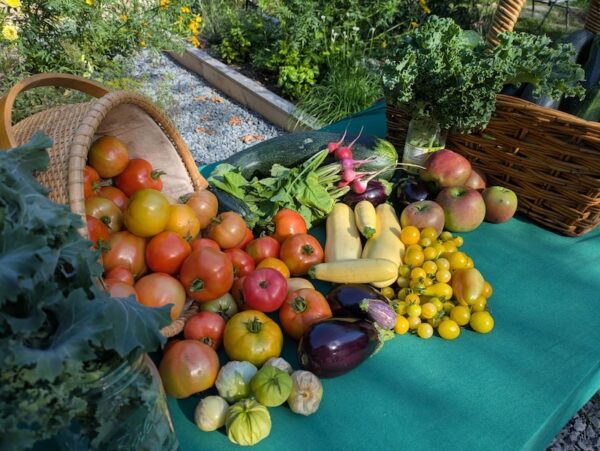
In the thick heat of August, our harvest baskets brimmed with vegetables—so heavy with crops that it took two sets of hands, gripping each basket end just to carry them. Yet by late November, lively beds were cleared and our once bustling garden turned to rich, barren soil.
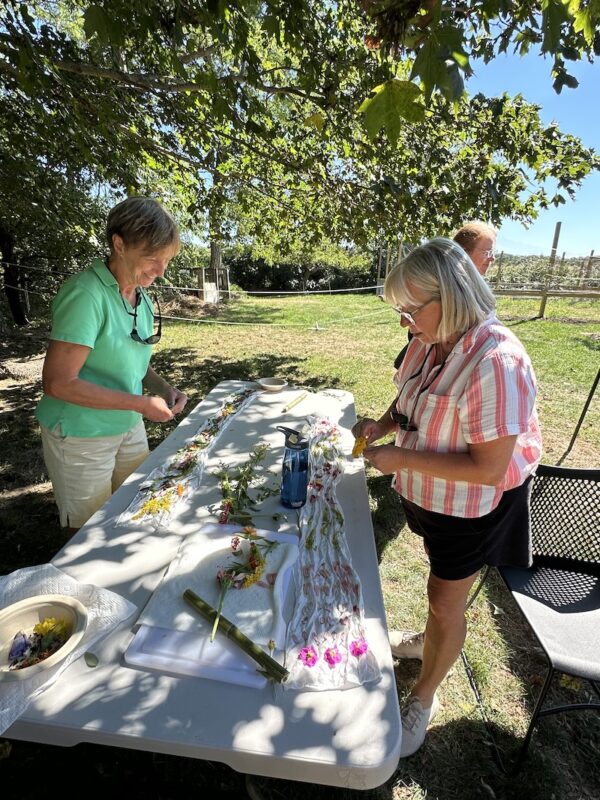
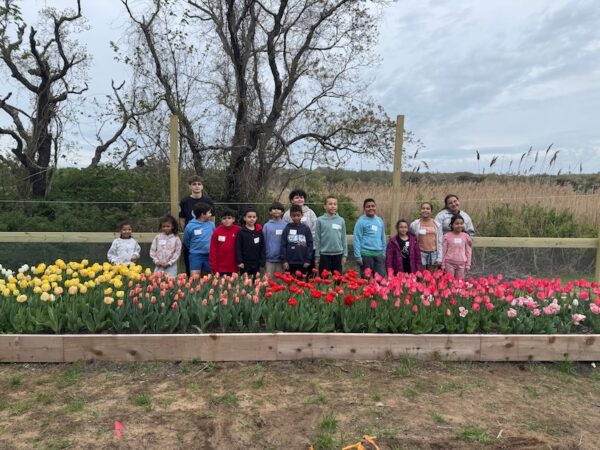
The major seasonal changes at Not Enough Acres Farm mirror the shifts our organization experiences with each new year of farming. In our second year of growing, we harvested and donated 2,000 pounds of produce compared to our pilot year’s 1,000 pounds. We nearly doubled the variety of crops we grew in year one, going from having 19 crop varieties to 36. We welcomed the community to 34 events at our farm this past season, ranging from gardening workshops to farm workdays. These numbers say a lot, but they still don’t fully capture the community impact of a space like Not Enough Acres Farm.
At the core of Dennis Conservation Land Trust’s farming initiative is our desire to connect people with the land we work so hard to protect. We don’t just want to conserve land—we also want our community to feel a lasting, generational bond with it.
Robin Wall Kimmerer captures this perfectly: “People often ask me what one thing I would recommend to restore the relationship between land and people. My answer is almost always, ‘Plant a garden.’” We’re learning firsthand just how restorative this practice can be, and many of our farm volunteers feel the same way.
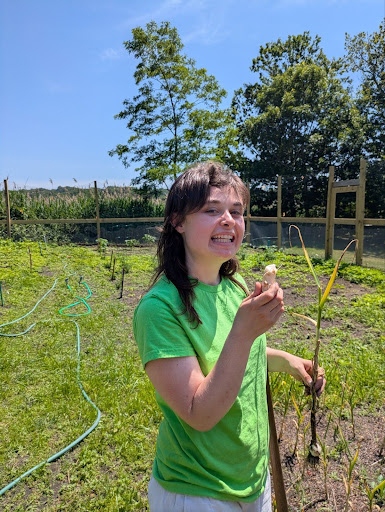
One of those volunteers is Valerie Amicangioli, who began farming with DCLT in the summer of 2025 and has spent countless hours weeding, planting, and harvesting alongside us.
“Actually helping the plants grow made me really appreciate how the natural world works,” she said. “Like what factors decide the direction roots grow in, and how each vegetable species interacts with the soil. It was like getting to know the land personally.”
And trust us—Valerie did get to know the land personally, often ending volunteer days with a wide smile and a face covered in dirt.
Aside from getting to know the land, Valerie spent the summer farming alongside Breyer Rogan and Malibu Slattery, who united to make the perfect trio. Breyer, an avid skier who attends school in Vermont, shared her experience with digging in our dirt this summer: “Growing up in Dennis, I have always enjoyed playing hide-and-seek, searching for animals, making mud pies, and swimming in the beautiful land I am so lucky to call home…[volunteering] made me further appreciate the outdoors and fall more in love with the town of Dennis…there is nothing quite like spending time with people from all walks of life and sharing the same dedication for the DCLT and the importance of the environment.”
Though she now spends most of the year away from the Cape, Breyer’s time on the farm deepened her connection to Dennis.
For Malibu, farm life offered a chance to slow down and reconnect. “Working with DCLT has really helped me put my life on ‘slow mode’. [Volunteering on the farm] has turned a quick paced, usually mass-scale view of land management into something raw, something tangible and relatable…Every hour I put into tending to it adds a little piece of me to the earth, to the core of the land.” Malibu put in a lot of hours on the farm and we loved seeing everything she added to the space.
Some of our youngest—and mightiest—volunteers this past season were siblings Rylynn and Ryan, who helped us tackle winter preparations at the farm. After working hard to pull the last of the season’s crops, Rylynn said, “My favorite part was weeding. I liked seeing the before and after… I really liked being outside.” Moments later, Ryan rolled into the scene on two wheels—well, technically, his dad rolled him in on a wheelbarrow. “My favorite part was cutting,” he announced. “My dad said I could be a little lawn mower. It was fun because I got to be with my family.”
With another season behind us, we’re energized by what we’ve accomplished. The growth we’ve witnessed—in our crops, in our programming, and in the people who show up week after week—is just the beginning. We’re ready to build on this momentum and continue growing food, community, and connection in the year ahead.