



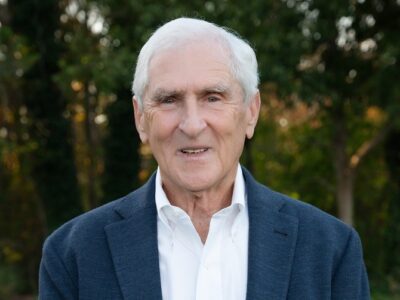
By Joe Masse, President of the Dennis Conservation Land Trust
“Tree Hugger” is often used as a dismissive or derogatory label for those seen as overly concerned with environmental protection. Yet the history behind this term tells a very different and far more honorable story.
Its roots trace back to the 1730s, to the Bishnoi community in India, where 363 men and women gave their lives to prevent the destruction of Khejri trees, an early and profound act of environmental stewardship. Centuries later, in the 1970s, the Chipko movement (chipko meaning “to cling”), again demonstrated the power of nonviolent action, as communities physically protected forests from destructive logging practices.
In the United States during the 1960s and 1970s, environmental advocates employed similar tactics. Individuals chained themselves to trees or climbed Douglas Firs and Redwoods to halt their destruction. Perhaps most famously, Julia “Butterfly” Hill lived atop a 200-foot-tall, 1,000-year-old redwood for 738 days, and succeeded in saving it.
These advocates were frequently portrayed as emotional, impractical, or extreme. History, however, tells a different story.
Their persistence and moral clarity helped shape public understanding and public policy around forest conservation and environmental protection.

Rachel Carson’s Silent Spring revealed the interconnectedness of life and the profound dangers posed by the indiscriminate use of pesticides. Together with grassroots environmental action, this work helped lead to landmark legislation, including the Clean Air Act of 1970 and the Clean Water Act of 1972. While the Supreme Court significantly altered the scope of these Acts in 2025, their original passage stands as a testament to the lasting influence of early environmental advocates.
The Dennis Conservation Land Trust does not engage in tree-sitting, nor have we produced a modern Silent Spring. What we do bring is sustained, local action. Through our biodiversity initiatives, our focus on water quality in Chase Garden Creek, our efforts to identify and protect vernal pools, our commitment to sustainable farming at our headquarters, our environmental education programs for children and young adults, and our preservation of open space, we are making a measurable and enduring difference in the environment we all share.
We are proud to carry this work forward. We labor in the shadow of those who came and stewarded before us, Indigenous Communities and those early “Tree Huggers” of the 1960s and 1970s whose courage, conviction, and sacrifice laid the groundwork for responsible stewardship today.